
Te Ataarangi ki Waiariki

![IMG_7755[1].jpg](https://static.wixstatic.com/media/0f7365_15a5d5b0d61f4f308a4bd1a20ea25ea6~mv2.jpg/v1/fill/w_327,h_245,al_c,q_80,usm_0.66_1.00_0.01,enc_avif,quality_auto/0f7365_15a5d5b0d61f4f308a4bd1a20ea25ea6~mv2.jpg)
![IMG_4944[1].jpg](https://static.wixstatic.com/media/0f7365_7eaeb41bf1604da0ad2068f4bf91458f~mv2.jpg/v1/fill/w_327,h_245,al_c,q_80,usm_0.66_1.00_0.01,enc_avif,quality_auto/0f7365_7eaeb41bf1604da0ad2068f4bf91458f~mv2.jpg)
Ko wai mātou?
Te Ataarangi ki Waiariki is a registered charitable trust and the regional representative of the Te Ataarangi movement, which has played a significant role in the revitalisation of te reo Māori in Aotearoa. Since 1985, beginning as a kaiako training programme, Te Ataarangi has been active in the Waiariki region for over 40 years, supporting the growth and use of te reo Māori within our communities.
Over this time, Waiariki has offered a rich “hakari” of learning opportunities, including full-time day classes, evening programmes, one-hour sessions, wānanga, and online learning.
These have been delivered across a wide range of settings, including whare wānanga, kura and kōhanga reo, businesses, whānau, hapū, and iwi. Regardless of the setting, the kaupapa of Te Ataarangi remains at the heart of every learning experience.
As a trust, we are committed to making a meaningful impact in our community—uplifting and empowering those we work alongside through the strength of te reo Māori. We are guided by a shared passion, a deep sense of purpose, and a commitment to unity, support, and cultural revitalisation.
Te reo Māori is a taonga that we deeply cherish, and our aspiration is to see it embraced by all. While we hope that one day our services may no longer be needed, we remain dedicated to supporting the revitalisation of te reo Māori for as long as it is required, ensuring it continues to thrive for generations to come.

Ngā Peka o Te Waiariki
Te Waiariki is a large and diverse region, stretching across coastal areas, inland valleys, and mountainous landscapes. It is home to many iwi and is strongly connected through waterways, geothermal activity, and the natural environment.
The rohe begins at Maketū, an important landing place of the waka Rākau-Tapu-Matarua-o-Atuamatua, and extends to Te Awa o te Atua, where multiple waka arrived. From there, it follows the eastern coastline through Whakatāne, Ōhiwa, and Ōpōtiki, the rohe of Te Whakatōhea.
Continuing along the coast, the region includes Tōrere (Ngāi Tai) and the coastal areas of Te Whānau-ā-Apanui. From the coastline, the rohe moves inland across the ranges toward Pōtaka, connecting to the descendants of Porourangi and Tukaki.

Heading further inland, the rohe includes Rūātāhuna, associated with Ngāi Tūhoe, before moving south toward Tūrangi and the central plateau near the mountains of Tūwharetoa.
The rohe then extends north toward Mangakino, connecting with Kahungunu, and into the areas of Waikato and Maniapoto. It continues through Tokoroa, within the rohe of Raukawa, and across the forested ranges of the Kaokaoroa o Pātetere.
From there, it passes through areas including Horohoro, Mamaku, Kaharoa, and Te Waharoa, before reaching Tauranga Moana, home to Ngāi Te Rangi and Ngāti Ranginui, and eventually returning to Maketū.
Together, these areas form the rohe of Te Waiariki — spanning from the eastern coastline, across inland regions, and through multiple iwi boundaries.
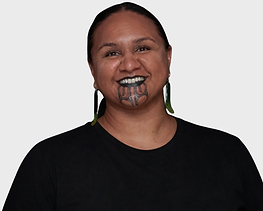
Te Komiti a Rohe

Rukuwai Daniels
Heamana
Tuhourangi, Ngati Wahiao, Ngati Whakaue, Tuhoe
.png)
Kere Mitai
Kaitiahi Pūtea Tuarua
Ngāti Pikiao, Tūhourangi Ngāti Wāhiao, Te Whakatōhea, Ngāti Rangitihi

Tutu Judy Kutai
Pouwhakahaere
Tuhoe, Te Arawa, Ngati Porou, Nga Ariki

Sarah Fraiser
Kaituhi
Ngāti Kahungungu

Hemoata Kautai
Takawaenga
Te Arawa, Tuhoe, Ngati Porou

Miriamai Barbour
Kaitiaki Pūtea Tuatahi
Waikato, Te Whānau-ā-Apanui

Ropata Kautai
Takawaenga
Te Arawa, Tuhoe, Whaktohea